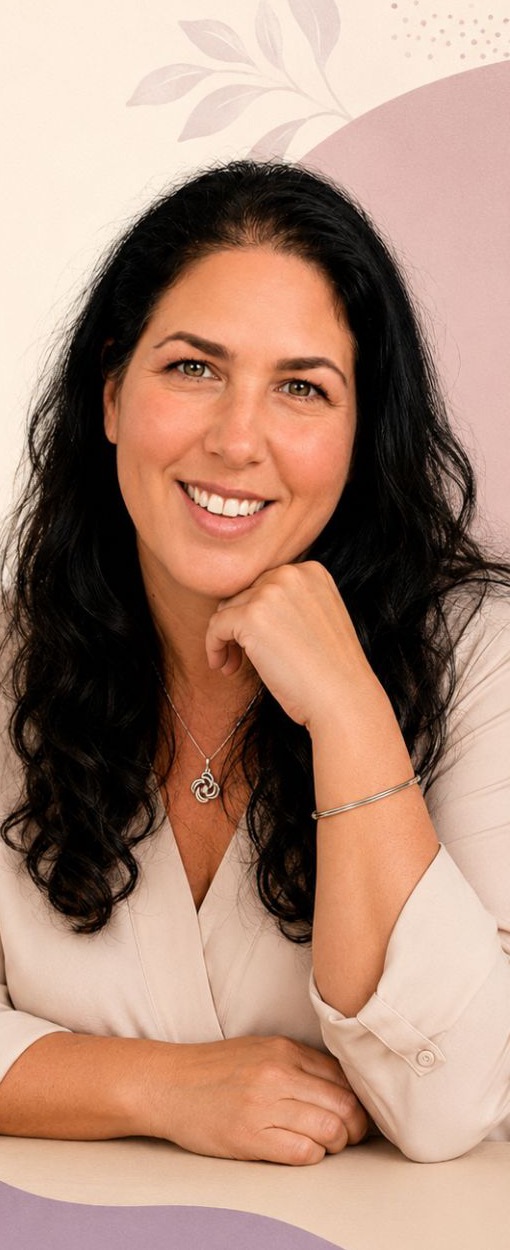
Nice to meet you — I'm Tali.
Before I was an RBT, and before I worked with families, I was a mother looking for answers.
I raised children with ADHD and impulsivity, and I remember sometimes dreading birthday parties and family gatherings — the looks, the comments, and the feeling that everyone was waiting for my child to do something wrong.
The phone calls from school affected me too.
When you hear again and again what your child is doing wrong, it becomes very easy to start seeing them through their difficulty.
I did that too.
Until I understood that I needed to change the question.
Instead of asking only:
“How do I make this behavior stop?”
I started asking:
“Who is the child behind the behavior, and what do they need to learn right now?”
And that changed the way I look at children.
What I look for
A stubborn child?
There may be a leader in there who needs to learn how to use that strength.
A child who is always racing ahead?
Of course we will teach safety — but perhaps we can also give him chances to move, to help, and to lead.
A child who hits when frustrated?
We stop the hitting, but we do not stop there. We teach him to notice what he feels, to use words, and to find another way to respond.
I don't ignore behavior. I simply don't let it define the child.
I bring my experience as a former preschool educator and as an RBT® — and also my experience as a mother who has been on the other side.
I know how it feels when your child becomes “that child.”
And that is exactly what I want to give other parents today: someone who will not only tell them what isn't working, but who will sit down with them and say, “Okay. Let's understand what is happening, and see how we can help.”
Without judgment.
Without trying to change the child's personality.
With boundaries, with understanding, and with tools you can genuinely use in real life.
See the child. Understand the behavior. Build from their strengths.
Let's talk.
Tell me a little about your child and what is happening right now. We will take it from there.